Meet the garden mint family
The ‘Lamiaceae’ family of hardy plants
The rich, spiciness of these plants makes them useful in cooking, and nearly half the spices in your kitchen come from this one family, including basil, rosemary, lavender, marjoram, germander, thyme, savory, plus culinary sage and of course mint, peppermint, and spearmint. It’s the Lamiaceae or Mint family!
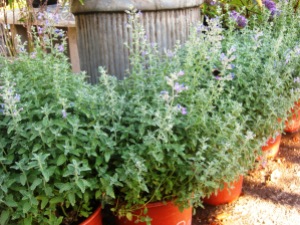
Fluffy catmint
“Much Virtue in Herbs, little in Men.”
– Benjamin Franklin
Look for square stems
Plants with, what Wildflowers and Weeds says, are “square stalks with opposite leaves, and usually aromatic” include Coleus, Agastache, known as hyssop or hummingbird mint, Monarda or Bee Balm, Ajuga, Catmint and Lavender.
Lamium, Perovskia or Russian sage, Phlomis,…Jeruselem sage, Lamb’s Ear or stachys are more varieties that grow excellently in the foothills.
Have a Cuppa?
You can make tea from these CA natives, California Wild Mint, Mentha arvensis, Hummingbird Sage, Salvia spathacea and Fragrant Pitchersage, Lepechinia fragrans, just wash and tear a few small leaves into a non metal cup or bowl and pour very hot water on them to steep to taste.
One of the best things about these plants are that the deer leave them alone. With the exception of coleus, which the deer munch like salad, herb smelling plants are by passed by deer.
Designing with minty herbs in the garden
Thyme is used to edge every planting bed in my garden. Low growing and handy to the kitchen it doesn’t mind being stepped on a bit. The silver thyme is an especially beautiful variety. Also, one called ‘Foxley,’ is an attractive variegated form. The creeping or wooly thyme covers these rock steps, below.
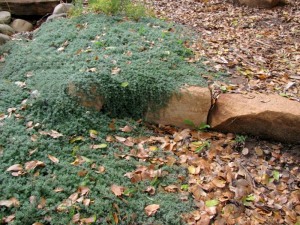
Carpet of creeping thyme
Oregano as a landscape plant? Yes!
Finely cut medium sized leaves grow in whorls on this vertically growing plant. It blooms all summer and in Fall gets trimmed like lavender, sheared to 6 or 8 inches. A mid-summer cut can prevent it one drawback of becoming leggy.
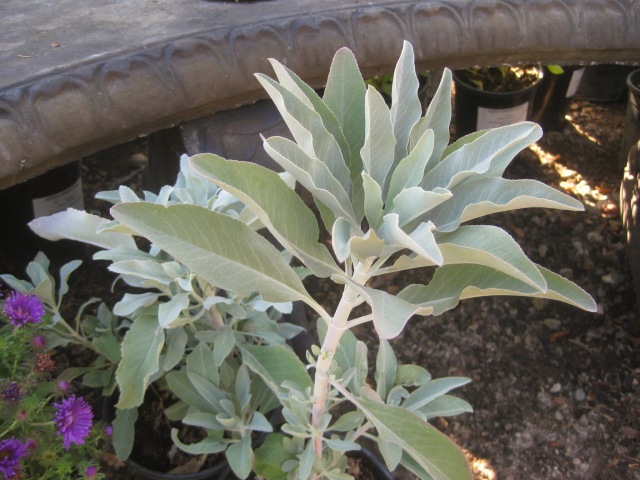
Creamy white sage…see the square stem?
Agastache, hyssop or hummingbird mint, all the same plant remind you of penstemon growing tall with colorful blooms on long stems. It can be shaped and trimmed like lavender as well.
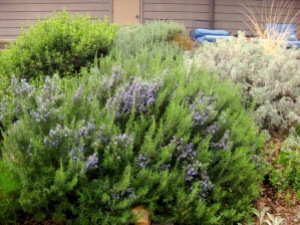
Rosemary ‘Ken Taylor’
“As for rosemary, I let it run all over my garden walls,
not only because my bees love it
but because it is the herb sacred to remembrance
and to friendship, whence a sprig of it hath a dumb language.”
– Sir Thomas More
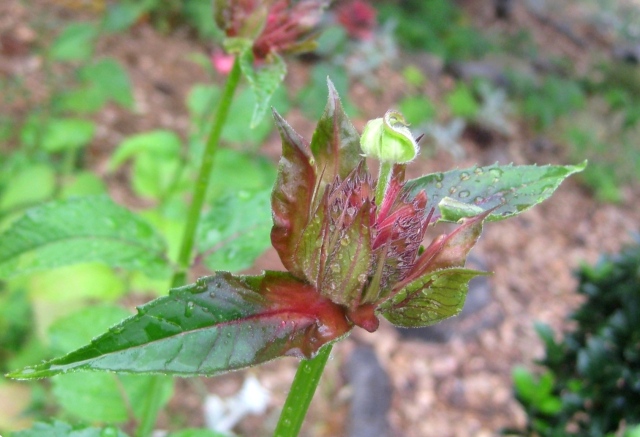
Monarda or bee balm bud…so unique
Monarda, or bee balm, comes in the common red and rose pink, even white sage-y flower, grows tall and has the most unusual bud that you’ve ever seen! Arrow shaped leaves grow lushly up the stalks and are deep green.
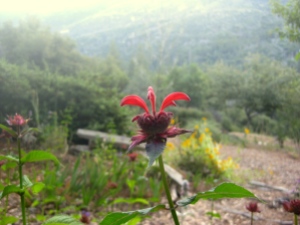
Red bee balm in the mist
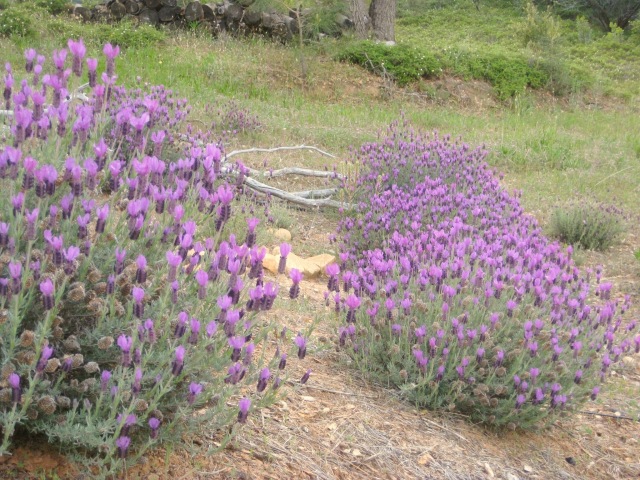
Lavender fields, hopefully for a long time,…maybe not forever
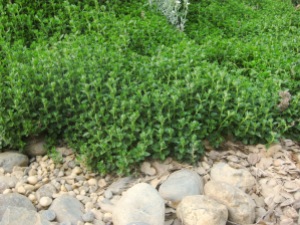
Germander or Teucrium chamaedrys
Everyone know rosemary, lavender, culinary sage and mint, but do you know Teucrium? Commonly known as Germander, Teucrium chamaedrys is one of the best ground covers for the garden. Finely textured, tiny deep green leaves grow uniformly on fragile seeming stems and seem to fill in whatever space you allow it. It blooms like thyme in spring, is evergreen like many of these and is often used in herbal knot gardens.
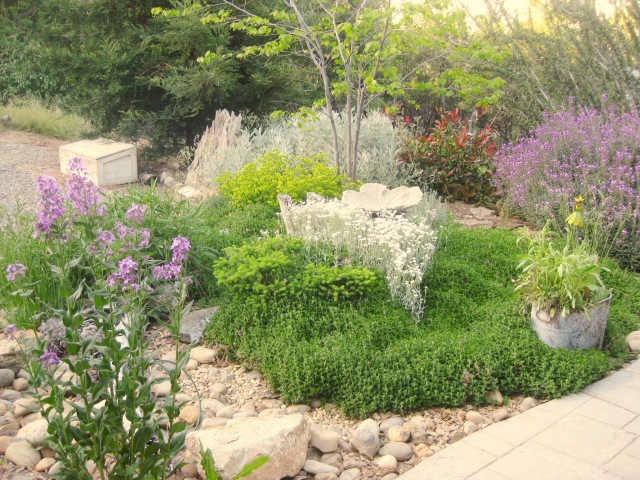
See how teucrium does?
A word about growing mint in the garden:
If you’ve ever experienced mint running rampant through a choice planting bed then you have know the epitome of frustration for a gardener. We do it to ourselves! However, in the dry areas, mint is quite controllable if you plant it beyond any irrigation or drip system. In places with summer rain, just plant in a pot! I have pineapple mint in several places and chocolate mint under a shady Box elder and all are very well behaved, ebb and flow with the seasons and I enjoy the leaves in cooking and in drinks,…seen them bloom and fade.
***
I’ll be looking for the ‘Lamiaceae family’ at the nursery now, because these all can be easily and beautifully planted in the garden. You may be looking for square stems, too.

